Guides · Spring Hill, Florida
The History of Spring Hill in 7 Landmarks
Spring Hill is the rare Florida town that almost named itself into a lawsuit, a place where the map lied before it told the truth, and where the roadside attractions outlasted the sales pitch.
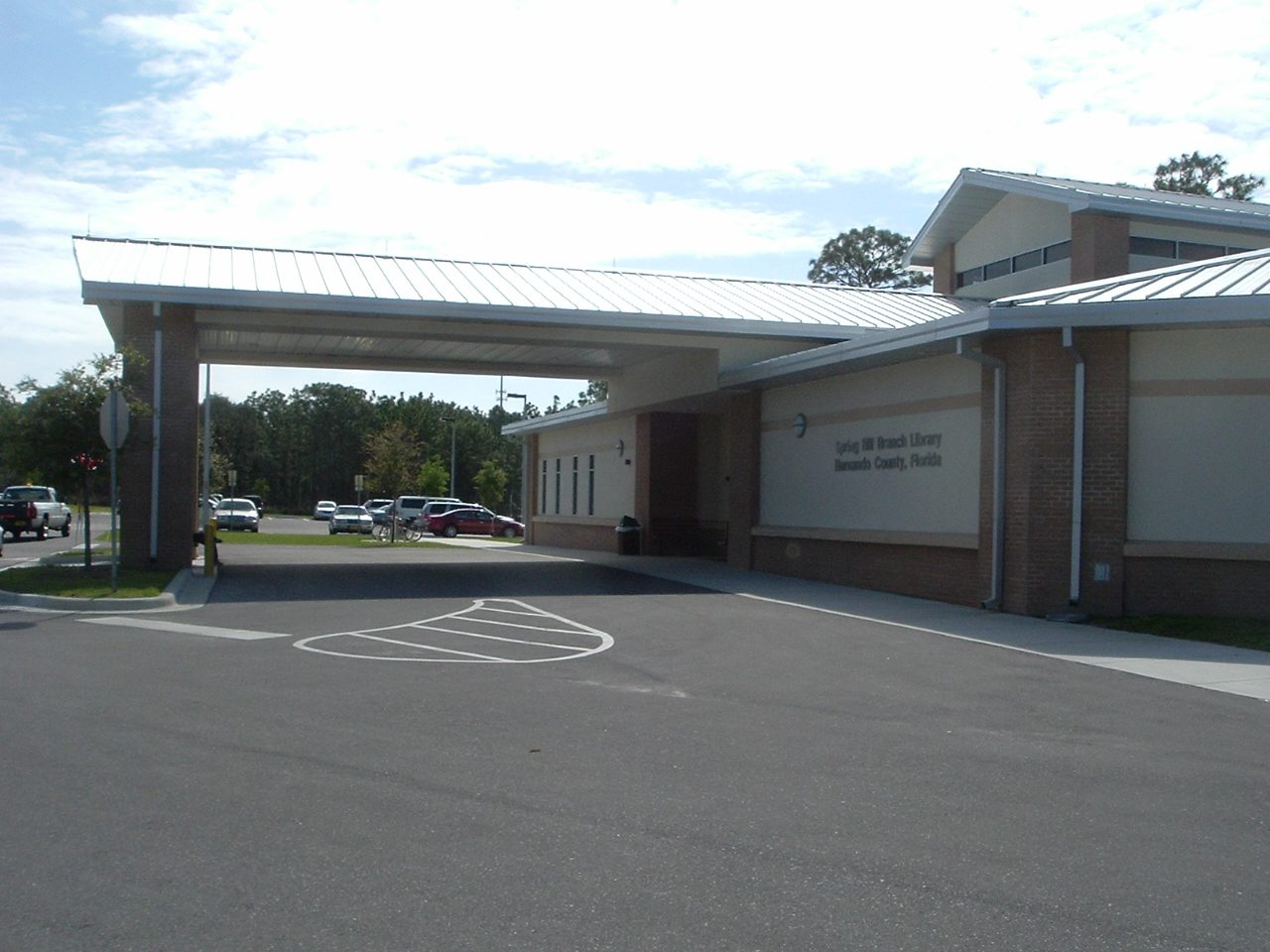
The story starts with a name that wasn't. In 1967, the Deltona Corporation and the Mackle Brothers began selling a planned community they called Spring Lake. The name appeared in brochures, on plats, in the minds of thousands of Midwestern retirees. Problem: the name was already taken locally. So they settled on Spring Hill, which sounds less like a promise and more like a shrug.
But the area wasn't empty before 1967. Hernando County maps first showed this patch of scrub and pine in 1856, a century before the bulldozers arrived. What the Mackles did was not build a town so much as assemble one from a catalog. Spring Hill was a product before it was a place. It still reads as one, which is exactly why it works.
The Waterfall That Wasn't a Waterfall
Every planned development needs a front door. Spring Hill's is a waterfall at US 19 and Spring Hill Drive, the original gateway feature of the development. It is not Niagara. It is a concrete cascade that has been recycling the same water for decades, a piece of mid-century landscaping ambition that has aged into something approaching geological permanence. Locals use it as a meeting point. Visitors use it as proof that someone, once, cared about first impressions.
The waterfall doesn't roar. It murmurs. It sits there, patient, while the traffic of US 19 roars past it. In a town built on selling a vision, it is the vision made visible: modest, a little dated, but stubbornly on.
The Dinosaur With a Garage
Florida's roadside history is written in concrete, and Spring Hill's chapter is a dinosaur. Harold's Garage, a dinosaur-shaped filling station, stands on US 19, and next to it, a pink apatosaurus does what pink apatosaurs do: nothing, with great dignity.
This is not a subtle landmark. It is a long-necked prehistoric reptile rendered in fiberglass and painted the color of a strawberry milkshake. It is absurd, and it is beloved. The dinosaur predates the town's boom, a holdover from the era when you lured drivers in with something you could see from a quarter mile away. It still does that. The gas pumps may have changed, but the pitch is eternal: stop here, look at this, stay a while.
The Mermaids Next Door
Spring Hill cannot claim Weeki Wachee Springs, but it can claim proximity. The spring-fed attraction sits on the town's doorstep, with live mermaid shows running since the 1940s. That means Spring Hill's most famous landmark isn't inside its limits. It's the neighbor who throws the better party.
The mermaids are not a gimmick. They are a profession. Women (and some men) train to hold their breath, to perform underwater, to make the tourists believe that myth is just biology with better lighting. Buccaneer Bay, Florida's only spring-fed water park, sits alongside. The water is 72 degrees year-round. The mermaids are timeless. Spring Hill gets the spillover: the hotels, the fast food, the people who came for the tails and stayed for the subdivisions.
The Botanical Gardens That Grew Anyway
The Nature Coast Botanical Gardens is not a Mackle Brothers creation. It is what happens when a planned community stops being planned and starts being lived in. Volunteers maintain the grounds, the paths, the plantings. It is green, quiet, and free of the sales pitch that built the town around it.
The gardens are the counterargument to Spring Hill's reputation as a sprawl of identical roofs. They are proof that people here will make their own sense of place when the developers move on. You will not find mermaids or dinosaurs. You will find people who like to dig in the dirt and watch things grow, which is its own kind of Florida magic.
The Numbers That Tell the Real Story
The census data is the most honest historian. Spring Hill has 118,814 people and 48,593 housing units. Of those, 3,608 are vacant. That's not a ghost town, but it's not a sold-out brochure either.
The median age is 43.3 years, which explains the pace of life. The median home value is $248,400, and the median gross rent is $1,301. Median household income sits at $66,557, with 19.7 percent of adults holding a bachelor's degree or higher. The unemployment rate is 6.1 percent.
Here's the number that tells you everything: 1,264 housing units are held for seasonal or recreational use. That's about 2.6 percent of all homes. Spring Hill is not a vacation town. It is a place where people live, mostly year-round, mostly without the postcard expectations.
The Town That Wanted to Be Called Something Else
The naming story is the town's founding joke, and it never gets old. Spring Lake was the dream. Spring Lake was on all the paperwork. Spring Lake was already taken, so we got Spring Hill, which sounds like the name you settle for when the good one is gone.
But here's the thing: the town settled into its name. It made it work. The waterfall, the dinosaur, the mermaids down the road, the gardens that volunteers maintain because nobody else will—they all add up to something the Mackle Brothers never sold. A real place, with all the contradictions that entails.
Spring Hill was a product before it was a town. That's not a criticism. It's just the truth, and the truth here is better than the brochure. The brochure promised a lake. The town delivered a hill, a pink dinosaur, and a hundred thousand people who figured out how to live with both.
Every business named above is one we hold a listing for, and every date traces to a source on our sources page. We do not describe menus, interiors or service we have not verified. Details change — confirm before you travel.