Guides · Spring Hill, Florida
Spring Hill FL Hurricane Season: What Visitors Should Know
Spring Hill is a mid-century land-sale product whose planned-development DNA still shapes what a hurricane-season visitor will find there, from its gateway waterfall to its roadside dinosaurs.
Why Spring Hill Was Built as a Land Development, Not a Town
The area first appeared on county maps in 1856, but the community itself did not exist until 1967, when the Deltona Corporation and the Mackle Brothers built it as a planned development. The developers wanted to call it Spring Lake and used that name through all their planning materials. The name was already taken locally, so they settled on Spring Hill. That is the whole story—the town is called what it is because the preferred name was unavailable, not because of any geographic feature. Spring Hill was a product before it was a town, a mid-century Florida land development sold by the acre, and it still reads as one. The street grid, the sprawl, the sense that everything was laid out to move lots rather than build community—that is the original design. For a visitor, the practical takeaway is that navigation is straightforward but charm is scattered; you orient by landmarks, not by a downtown.
The Spring Hill Waterfall: A Landmark Born from a Sales Pitch
At US 19 and Spring Hill Drive sits the Spring Hill waterfall, the development's original gateway feature. It was built as a sales pitch—a dramatic, wet welcome meant to signal that this was a place worth buying into. It is still there, a working landmark in the middle of the commercial strip. It is not a natural waterfall; it is a piece of marketing infrastructure that has outlived its original purpose and now serves as a way to get your bearings. US 19 is a main artery through the development's grid, and the intersection is hard to miss. If you are lost in Spring Hill, find the waterfall and you have found the center of the original plan.
Roadside Attractions in Spring Hill: Dinosaurs, Mermaids, and More
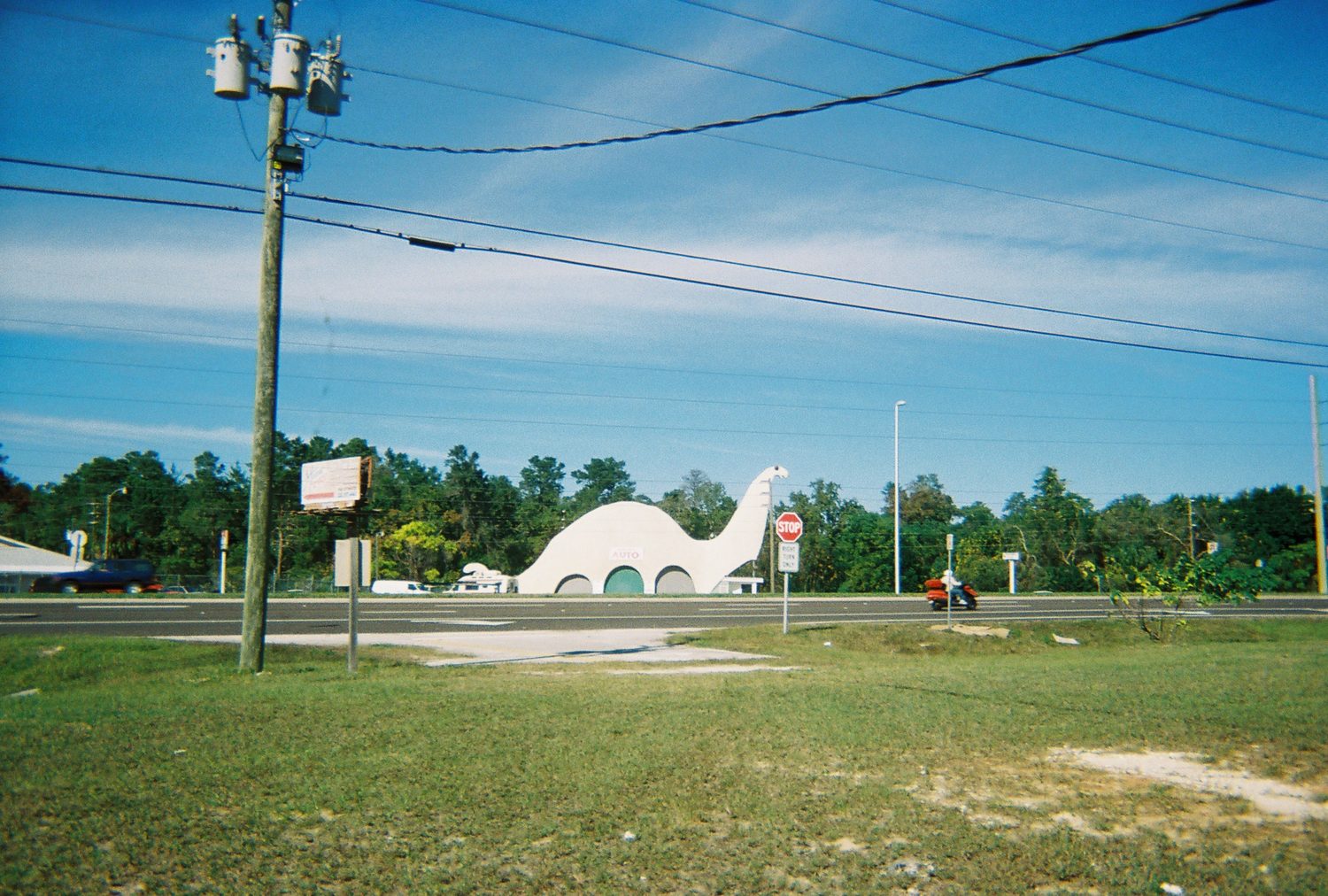
The roadside attractions are the reason to be here. Harold's Garage is a dinosaur-shaped filling station, and the pink apatosaurus standing on US 19 is exactly as odd as it sounds. It is a classic Florida roadside moment, a concrete dinosaur advertising gasoline, and it is worth a slow drive-by even if you do not need fuel. Just up the road, Weeki Wachee Springs sits on the doorstep. The live mermaid show has been running since the 1940s, and Buccaneer Bay is Florida's only spring-fed water park. These are not polished theme park experiences; they are older, stranger, and more fun for it. Spring Hill works as a base for this kind of roadside tourism—everything is close, and the town itself does not demand much of your time.
Hurricane Season in Spring Hill: Lodging, Driving, and Safety Tips
Hurricane season runs June through November, and the data suggests Spring Hill is a place where people own more than they rent. The population is 118,814, with a median age of 43.3 years. Of the 48,593 total housing units, 3,608 are vacant and 1,264 are held for seasonal or recreational use. The median home value is $248,400, and median gross rent is $1,301. What this means for a hurricane-season visitor is that short-term rental supply is thin outside the seasonal units, and those seasonal units may be occupied by owners or locked up for the year. Book well ahead, expect to pay closer to the median rent than a bargain rate, and be ready for your lodging to be a house rather than a hotel—this is a residential development, not a resort town. The unemployment rate is 6.1 percent, and median household income is $66,557, so this is a working community, not a vacation service economy. Move with flexibility: if a storm is tracking toward the Gulf, roads fill quickly, and the planned-development grid can mean bottlenecked intersections.
Rainy Day in Spring Hill: Indoor and Post-Storm Alternatives
When the weather turns, Nature Coast Botanical Gardens is a calm, low-key option—gardens hold up better than mermaid shows in a downpour, and they are quiet when the tourists scatter. If a storm cancels outdoor plans entirely, the nearby towns offer diversions that are worth the drive even in good weather. Dade City is 25 miles away and hosts the Kumquat Festival; Clermont, 56 miles, has Pig on the Pond; Cedar Key, 58 miles, does the Cedar Key Seafood Festival; Mount Dora, 66 miles, has both the Mount Dora Arts Festival and the Mount Dora Craft Fair; Altamonte Springs, 79 miles, runs Red Hot & Boom. These are not hurricane-season-specific events, but they are reasons to leave Spring Hill when the weather makes staying put pointless.
| Nearby Town (Distance) | Why Go During Storm Season |
|---|---|
| Dade City (25 miles) | Kumquat Festival offers indoor-adjacent market stalls and a small-town pace when the coast is wet. |
| Clermont (56 miles) | Pig on the Pond is a food-centric diversion on higher ground, away from Gulf surge risk. |
| Cedar Key (58 miles) | Cedar Key Seafood Festival is a reason to drive the coast before or after a storm passes. |
| Mount Dora (66 miles) | Mount Dora Arts Festival and Craft Fair give you two separate reasons to browse indoors. |
| Altamonte Springs (79 miles) | Red Hot & Boom is a regional event worth the longer drive if your Spring Hill plans wash out. |
Spring Hill will not pretend to be anything other than what it is: a land development that became a town by accident of name availability. That honesty is part of its appeal. Come for the dinosaurs, the mermaids, and the waterfall, and treat the grid as what it is—a place to pass through on your way to something stranger.
Common questions
- Is Spring Hill safe to visit during hurricane season?
- Spring Hill is inland in Hernando County, so it gets less storm surge than the coast. But hurricanes bring heavy rain and wind. Check local forecasts and have a plan. The town is a planned development from 1967, so it's built out with modern roads and drainage.
- Why is it called Spring Hill and not Spring Lake?
- The developers, Deltona Corporation and the Mackle Brothers, wanted to call it Spring Lake. That name was already taken locally, so they settled on Spring Hill. The area first appeared on county maps in 1856, but the community itself was built in 1967.
- What can we do in Spring Hill when it's raining?
- Head to Weeki Wachee Springs, right on the doorstep, for the live mermaid show that's been running since the 1940s. It's indoors. Or check out the Nature Coast Botanical Gardens, which has some covered areas. The dinosaur-shaped Harold's Garage is a quick photo stop on US 19.
- Is Spring Hill just a bunch of houses?
- It started as a product sold by the acre, and it still reads as one. But there are landmarks like the Spring Hill waterfall at US 19 and Spring Hill Drive, the original gateway feature. Plus, the pink apatosaurus at Harold's Garage is a classic roadside stop.
- How crowded does Spring Hill get in summer?
- Spring Hill itself is residential, with about 118,814 people. It's not a tourist town. The crowds are at Weeki Wachee Springs and Buccaneer Bay, Florida's only spring-fed water park. Summer weekends can be busy, so go early on weekdays.
- What's the cost of living in Spring Hill?
- Median home value is $248,400, and median gross rent is $1,301. Median household income is $66,557. It's not cheap, but it's less than coastal Florida. About 19.7% have a bachelor's degree or higher, and the unemployment rate is 6.1%.
Every business named above is one we hold a listing for, and every date traces to a source on our sources page. We do not describe menus, interiors or service we have not verified. Details change — confirm before you travel.